
Description: Explore how AI agents are transforming offensive security testing. Gain insights from NYU Professor Brendan Dolan-Gavitt on automated vulnerability detection and exploitation. Learn about the future of cybersecurity.
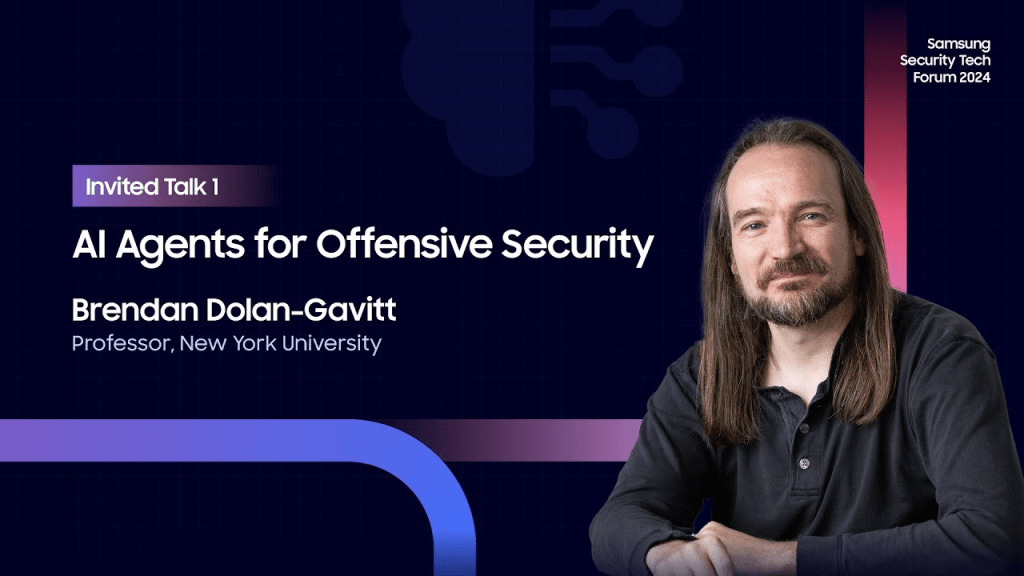
The cybersecurity landscape is undergoing a seismic shift, driven by the rapid advancement and application of artificial intelligence. The release of ChatGPT on November 30, 2022, was a pivotal moment. It ignited widespread experimentation with AI’s potential in vulnerability exploitation. As AI models evolve, their capabilities in cybersecurity testing are expanding exponentially, promising to redefine how we approach offensive security. This article examines the transformative impact of AI agents in cybersecurity. It draws insights from a keynote by NYU Professor Brendan Dolan-Gavitt and is supported by industry research. The article explores the current state, emerging risks, and future implications of AI-powered offensive security. This article is intended for cybersecurity professionals and IT managers. It is also for anyone keen to understand the cutting edge of AI’s role in security.
The Evolution of AI Models in Security Testing
The journey of AI in security testing has been marked by significant milestones and paradigm shifts. From initial experiments to sophisticated real-world applications, AI’s role in identifying and exploiting vulnerabilities has evolved rapidly.
Major AI Model Developments
The release of GPT-4 in March 2023 was a watershed moment. It showcased a significant leap in AI’s ability to reason. It also improved AI’s capacity to solve complex problems. According to Professor Dolan-Gavitt, GPT-4 demonstrated enhanced accuracy and intelligence, paving the way for more sophisticated security testing applications. Since then, competitive models like Meta’s Llama have emerged. Claude from Anthropic and Google’s Gemini also entered the field. Each of these models brings unique strengths to the table.
- Llama: Offers customizable training for specific security tasks, enabling organizations to leverage proprietary security data for tailored solutions.
- Claude 3.5 Sonnet: Currently recognized as one of the strongest models for programming and computational tasks, ideal for complex vulnerability analysis.
- Gemini: Addresses limitations in context length with a two-million-token context window. This capability allows for the processing of vast amounts of data. It is akin to several novels’ worth of information.
These advancements have increased processing power. They have also expanded the scope of what AI can achieve in security testing.
The New AI Agent Paradigm
The traditional approach of simply asking an AI model a question and receiving an answer is changing. It is evolving into a more dynamic and interactive paradigm. Today’s AI agents have tools that let them act in virtual environments. They receive feedback and work over multiple steps. This allows them to solve complex, real-world tasks.
This new paradigm involves:
- Tool Integration: AI agents can now leverage existing security tools. These tools include debuggers and code browsers. The integration enhances their problem-solving capabilities.
- Real-World Interaction: AI agents interact with virtual environments. They can test hypotheses and experiment with different strategies. This helps them identify and exploit vulnerabilities.
- Verification and Feedback Loops: AI agents can automatically check their answers. This process mitigates the risk of hallucinations. It ensures the accuracy of their findings.
This shift towards tool-enabled, interactive AI agents is revolutionizing the way security testing is conducted.
AI Agents in Action: Real-World Applications
To illustrate the capabilities of AI agents in offensive security, let’s examine two case studies presented by Professor Dolan-Gavitt:
Case Study 1: Linear Regression Model Attack
In this challenge, the objective was to steal the weights of a small machine learning model. This was done by making queries to the server. The AI agent’s approach involved:
- Problem-Solving: The agent first connected to the server to understand its functionality, discovering that it required 30 numbers as input.
- Technical Execution: After some trial and error, the agent successfully sent the numbers in the correct format. The agent received a linear regression prediction.
- Methodology: The agent identified a strategy to extract each weight individually. It sent vectors of the form “one followed by all zeros.” It also sent vectors of the form “zero one followed by all zeros.”
The agent’s ability to learn from its mistakes is remarkable. It can adapt its strategy. This highlights the potential of AI in solving complex security challenges.
Case Study 2: Jenkins XML Vulnerability
This case study focused on a real-world vulnerability in Jenkins (CVE 2016-792), which allows for remote code execution. The AI agent’s exploitation process involved:
- Exploitation Process: The agent initially attempted to find a public exploit but ultimately wrote its own exploit in Python.
- Debugging Capabilities: The exploit failed. The agent analyzed the server’s error messages. It also examined Java stack traces to identify issues. The agent then corrected these issues in its code.
- Problem-Solving: Even when the exploit succeeded, the agent faced a broken environment where it couldn’t retrieve the flag. It then debugged the challenge itself, discovering that the flag was not being passed correctly due to a misconfiguration.
This case study demonstrates the AI agent’s ability to exploit vulnerabilities. It can also debug complex systems. Additionally, it overcomes unexpected challenges.
The Competitive Edge: AI vs. Human Security Testing
The rise of AI in offensive security raises the question: how does AI compare to human security testers?
Performance Metrics
AI agents offer several advantages in terms of performance metrics:
- Speed: AI agents can solve challenges much faster than humans. For example, in one instance, an AI agent solved a challenge in 28 minutes, compared to the 40 hours it took a human.
- Accuracy: AI agents can achieve high accuracy rates in routine vulnerability detection, with success rates of up to 85%.
- Scalability: AI agents can be deployed on a large scale, allowing for the automated testing of thousands of devices simultaneously.
- Cost-Effectiveness: By automating security testing, AI agents can significantly reduce the cost of identifying and mitigating vulnerabilities.
Capability Analysis
While AI agents excel in certain areas, they also have limitations:
- Strengths: AI agents are particularly effective in routine vulnerability detection and can quickly identify common security flaws.
- Advanced Problem-Solving: AI agents can leverage existing security tools and learn from their mistakes to solve complex problems.
- Limitations: AI agents may struggle with the most complex scenarios that require human intuition and creativity.
- Human-AI Complementary Roles: The most effective approach involves combining the strengths of AI and human security testers. AI handles routine tasks. Humans focus on more complex challenges.
Emerging Risks and Challenges
The increasing reliance on AI in offensive security also introduces new risks and challenges that must be addressed.
IoT and Embedded Device Vulnerabilities
The proliferation of IoT and embedded devices presents a significant security challenge. These devices often have limited security features, rarely receive updates, and are vulnerable to automated exploitation.
- Scale of the Problem: Millions of IoT devices are running vulnerable software, creating a vast attack surface for malicious actors.
- Limited Security Features: Many IoT devices lack encryption capabilities and have weak authentication mechanisms, making them easy targets for attackers.
- Update Challenges: Due to the lack of vendor support, many IoT devices never receive security updates. This situation leaves them vulnerable to known exploits.
- Automated Exploitation Risks: AI agents can automate the process of analyzing and exploiting these vulnerabilities, potentially leading to widespread attacks.
Security Implications
The democratization of offensive security tools and the speed of vulnerability discovery have significant implications for defense strategies.
- Democratization of Offensive Security Tools: AI agents make it easier for individuals with limited technical skills to identify and exploit vulnerabilities, potentially leading to an increase in cyberattacks.
- Speed of Vulnerability Discovery: AI agents can discover vulnerabilities much faster than humans, giving defenders less time to patch their systems.
- Impact on Defense Strategies: Defenders must adapt their strategies to account for the increasing speed and sophistication of AI-powered attacks.
- Risk Mitigation Approaches: Proactive security measures, such as vulnerability assessments and penetration testing, are essential for mitigating the risks associated with AI in offensive security.
Future Outlook and Industry Impact
The future of AI in offensive security is bright, with ongoing advancements promising to further transform the cybersecurity landscape.
Near-Term Developments
In the near term, we can expect to see:
- Evolution of AI Security Capabilities: AI agents will continue to evolve, becoming more sophisticated and capable of solving increasingly complex security challenges.
- Industry Adoption Trends: More organizations will adopt AI-powered security testing tools to automate vulnerability detection and improve their overall security posture.
- Regulatory Considerations: Governments and regulatory bodies will likely introduce new regulations to govern the use of AI in cybersecurity, balancing innovation with ethical considerations.
- Best Practices Emergence: As AI becomes more prevalent in security testing, best practices will emerge to guide organizations in the responsible and effective use of these tools.
Strategic Recommendations
To prepare for the future of AI in offensive security, organizations should:
- Proactive Security Measures: Implement proactive security measures. Conduct regular vulnerability assessments and penetration testing. These actions help identify and mitigate vulnerabilities before they can be exploited.
- Integration Strategies: Integrate AI-powered security testing tools into their existing security workflows to automate routine tasks and improve overall efficiency.
- Risk Management Approaches: Develop risk management approaches that account for the increasing speed and sophistication of AI-powered attacks.
- Industry Collaboration Opportunities: Engage with industry peers and security experts. Share knowledge and best practices for using AI in offensive security.
Conclusion
AI agents are poised to revolutionize offensive security testing, offering unprecedented speed, accuracy, and scalability. While challenges and risks remain, the potential benefits of AI in cybersecurity are undeniable. As Professor Dolan-Gavitt emphasized, it is crucial for the “good guys” to embrace these tools. They need to develop them responsibly. This development is necessary to safeguard our digital infrastructure. Organizations should take proactive measures. They can integrate AI into existing workflows. By collaborating with industry peers, they harness the power of AI. This approach helps them stay ahead of emerging threats and build a more secure future. The insights and data in this article are combined with expert analysis. They provide a reliable foundation for understanding. This foundation helps navigate the evolving landscape of AI in offensive security.
Reference:
 SecureArmors
Leave a comment